
A deal team's working day on an acquisition is spread across a data room, a spreadsheet per analysis, an email thread with the seller and a memo draft. The Acquisition Workspace puts the acquisition on one page: what the agents found and prepared, the book, the people, the carriers, the clients, the integration and the memo — with the stage strip across the top and the controls in the rail.
The hero

Target number, focus and city; the stage; the lead, the expected close and the number of book rows; the seven-stage strip (Screening, Data received, Analysis, IC memo, Signed, Integration, Day 100); and six headline figures — book revenue, client retention (with revenue retention under it), organic growth, top producer, top carrier, renewals in 90 days. Under it, one line on where the acquisition stands, how many decisions wait, and Analyze.
Seven zones
| Zone | What it holds |
|---|---|
| Findings | Prepared for you (the agents' decisions with Accept, Reject, Ask), the last Analyze run, and what the agents found with filters for high and critical, to review, approved and rejected. |
| Book | Retention period over period, revenue by period and organic growth, revenue by line, the renewal calendar, what the revenue is made of, data quality and cross-sell. |
| Producers | Revenue, share, clients and retention per producer; key people; retention agreement status. |
| Carriers | Premium and share per carrier, states, the acquirer's appointment status and the action. |
| Clients | Matches into the acquirer's book: to confirm, confirmed, new to the acquirer, rejected. |
| Integration | After close: the retention tracker and the 100-day plan as tasks. Before close: the plan the planner proposes. |
| Memo | The valuation arithmetic and the valuation-support memo built from approved findings. |
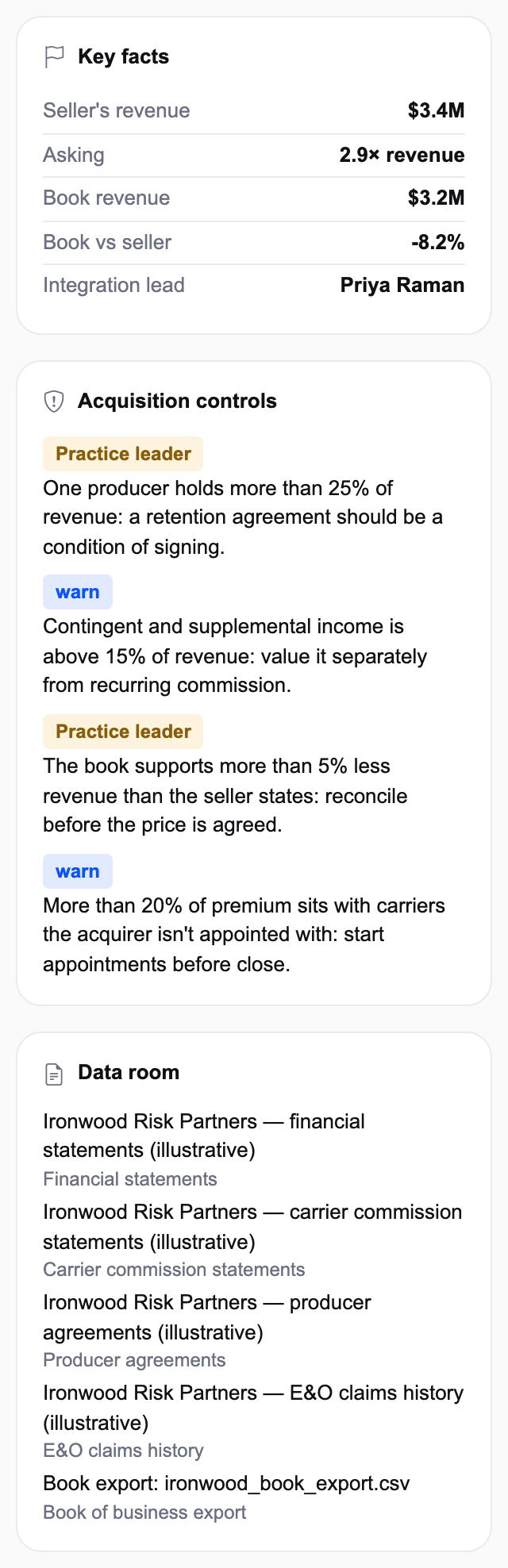
headline figures, Analyze"] --> F["Findings"] F --> B["Book"] --> P["Producers"] --> C["Carriers"] --> CL["Clients"] --> I["Integration"] --> M["Memo"] R["Rail: key facts,
acquisition controls,
data room"] -.-> F F -.->|"every citation"| RW["The rows behind it"]
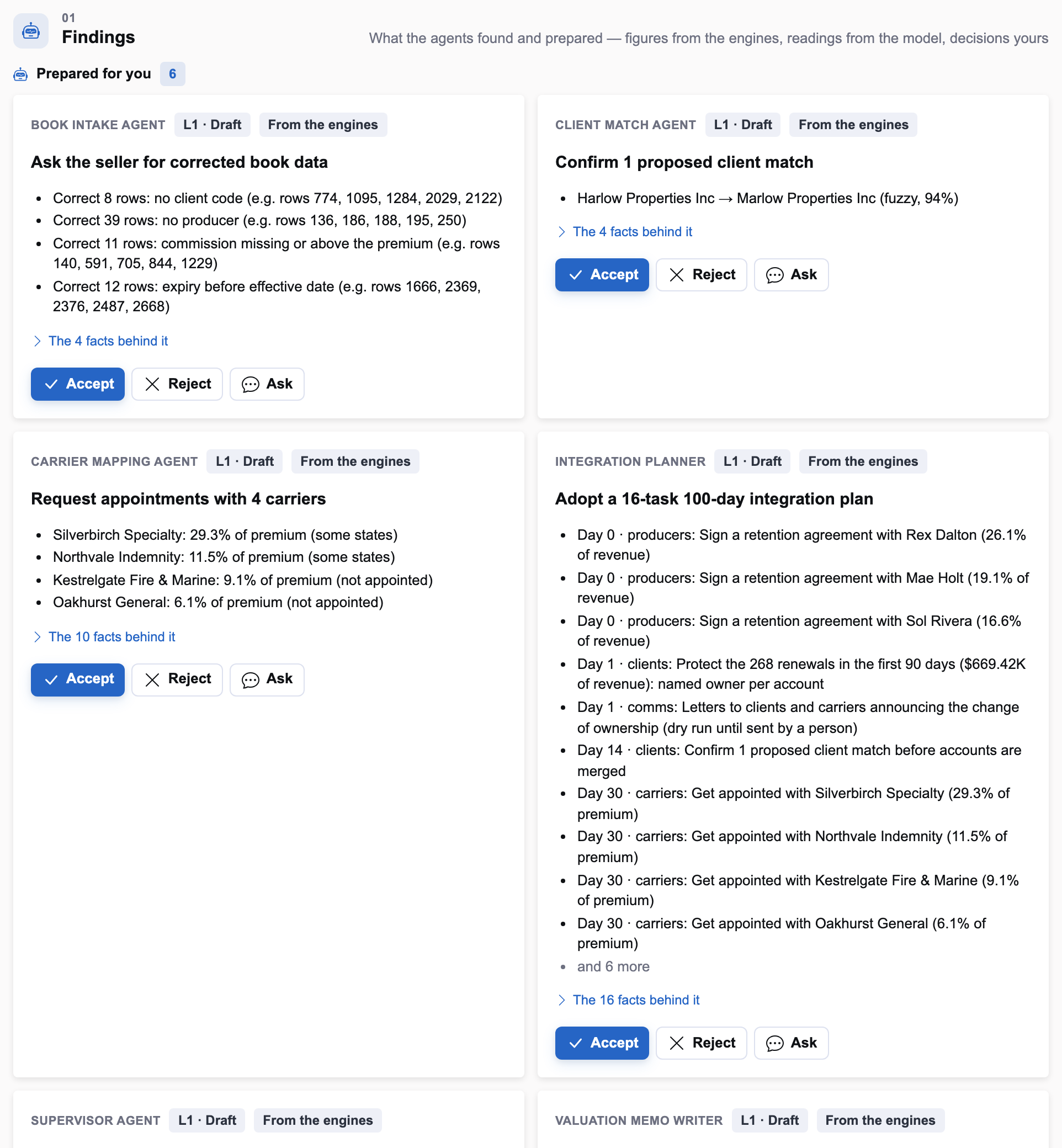
A prepared decision says which agent prepared it, its level (L1 draft here), whether it rests on the engines or the model, the lines of what it proposes, the facts behind it, and Accept, Reject and Ask. Ask questions the agent from those facts.
The rows behind every citation

Every chip that says “N book rows” opens a drawer with those rows — row number, client, line, carrier, producer, effective date, premium, commission, type, status and any data issue.
For the deal team
One page per acquisition; the next thing to decide is at the top.
For IT
Built on the shared workspace kit (workspace-react), the same shell as InsightUW and InsightCW.
For corp-dev leadership
Every acquisition in the pipeline looks the same, so reviewing one takes minutes.
Keep reading

Ten acquisition agents, inside authority
Book review, integration fit, memo and controls — and a person decides.
Read article
The seller's revenue the book won't support
An asking multiple of 2.9×, and a book 8.2% short of the seller's figure.
Read article
Two producers, 55% of the revenue
Key-person risk turned into retention agreements before signing.
Read article